← gallery
M81 (NGC 3031) · Spiral Galaxy
Bode's Galaxy
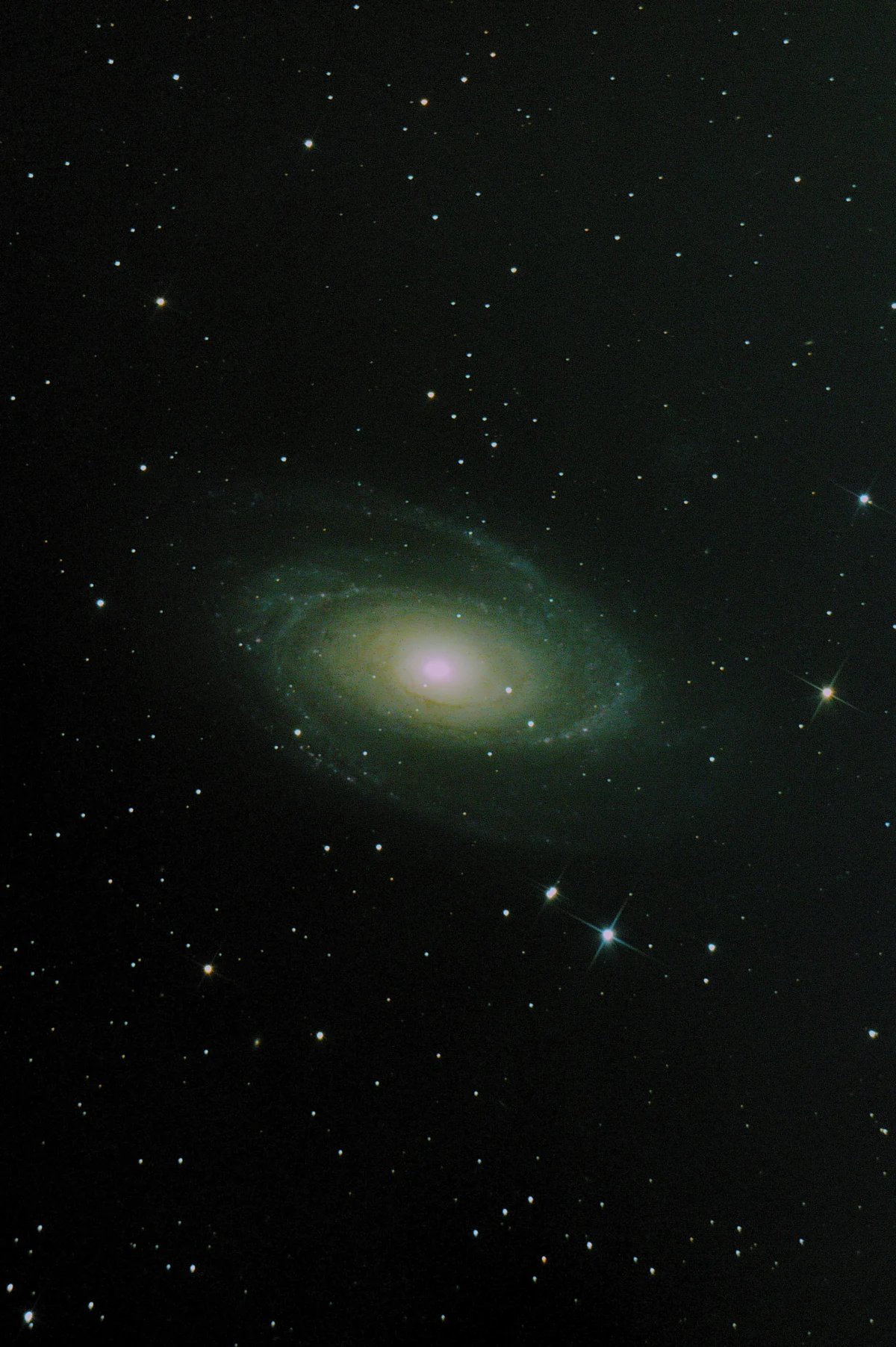
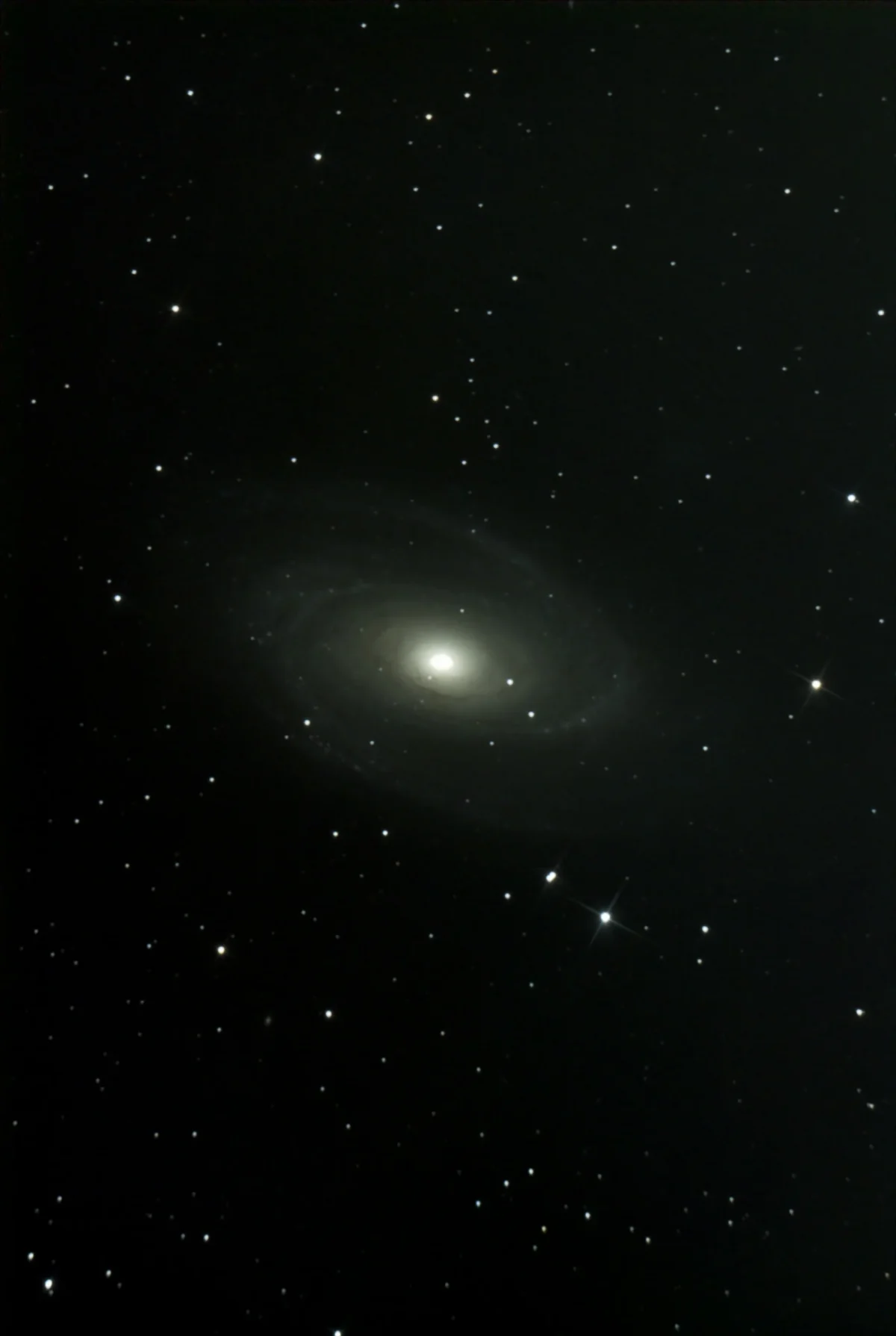
A grand-design spiral galaxy in Ursa Major — one of the brightest galaxies in the sky, with sweeping, symmetric arms and a luminous core.
M81, Bode's Galaxy, is the dominant member of the M81 Group, a cluster of galaxies about 12 million light-years away in Ursa Major. Discovered by Johann Bode in 1774, it is a textbook 'grand-design' spiral: two clean, sharply-defined arms wind unbroken from the bright central bulge all the way out to the disk's edge, traced by blue knots of young stars and threads of dust.
Those elegant arms owe their symmetry to a recent gravitational encounter with its turbulent neighbour M82, the Cigar Galaxy, which lies less than a degree away in the sky — the pair are a favourite two-for-one target. The tidal interaction has also funnelled gas into M81's core, feeding a supermassive black hole some 70 million times the mass of the Sun.
At magnitude 6.9 it is bright enough to glimpse in binoculars under dark skies, and its high northern declination keeps it visible for much of the year from the northern hemisphere. This view was taken through the 200 mm Newtonian, which resolves the spiral arms and the galaxy's dusty disk.
Those elegant arms owe their symmetry to a recent gravitational encounter with its turbulent neighbour M82, the Cigar Galaxy, which lies less than a degree away in the sky — the pair are a favourite two-for-one target. The tidal interaction has also funnelled gas into M81's core, feeding a supermassive black hole some 70 million times the mass of the Sun.
At magnitude 6.9 it is bright enough to glimpse in binoculars under dark skies, and its high northern declination keeps it visible for much of the year from the northern hemisphere. This view was taken through the 200 mm Newtonian, which resolves the spiral arms and the galaxy's dusty disk.
// imaging sessions
session // unassigned
// comments
Comments are moderated; first time may take a moment to appear.