// 21 November 2026
The Waxing Gibbous Moon Through My 8-inch Newtonian
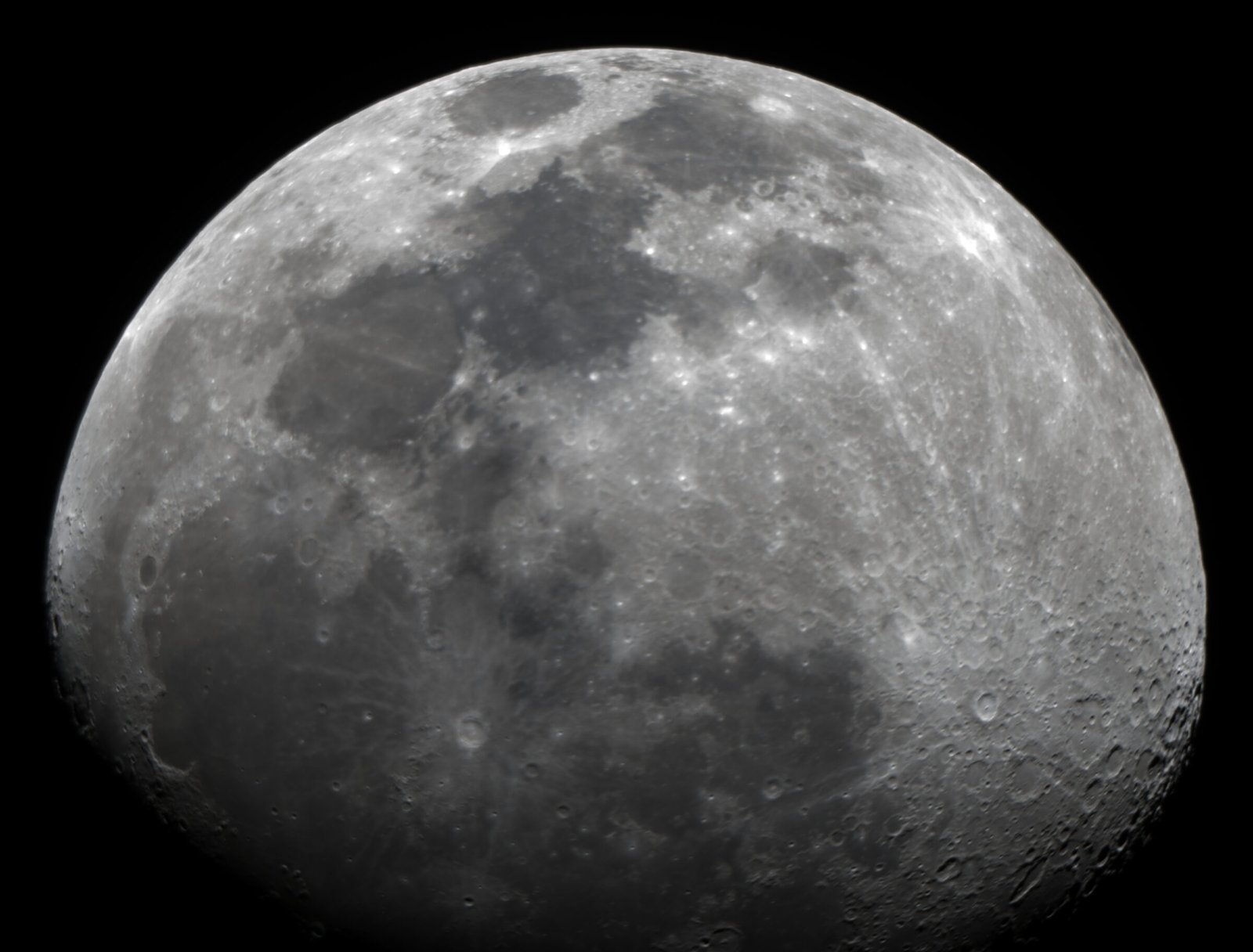
Lucky imaging the 82 % waxing gibbous Moon on 20 November 2026: thousands of video frames, the sharpest kept and stacked — plus a labelled map and a mineral-colour version.
On the evening of 20 November 2026 the Moon was a bright waxing gibbous, 82 % lit and 11.6 days old, standing about 35° high over my back garden in northern Germany. Instead of deep-sky photos, I pointed my 8-inch Newtonian at it and recorded short videos — thousands of frames in total — and turned the sharpest of them into the pictures below.
What you are looking at
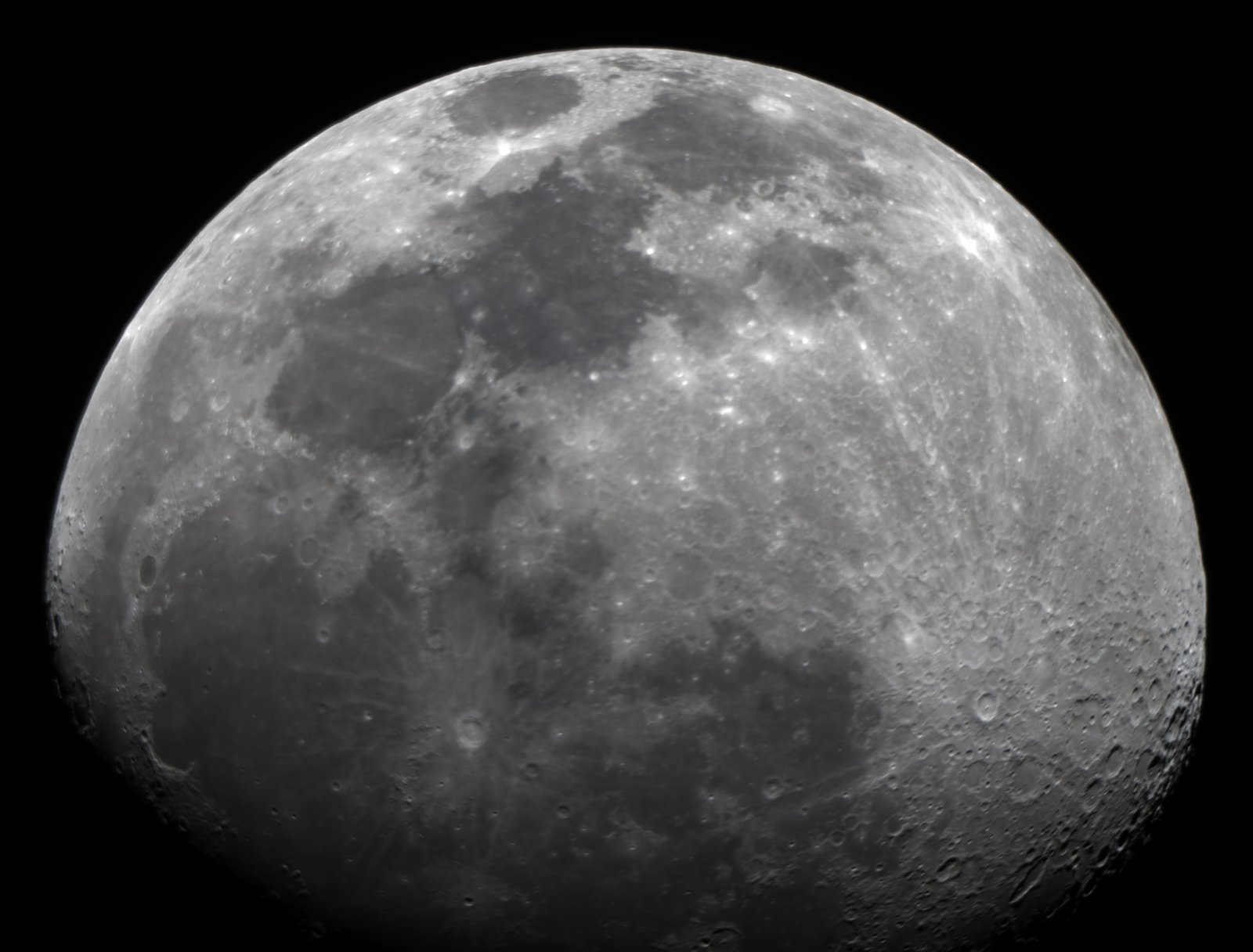
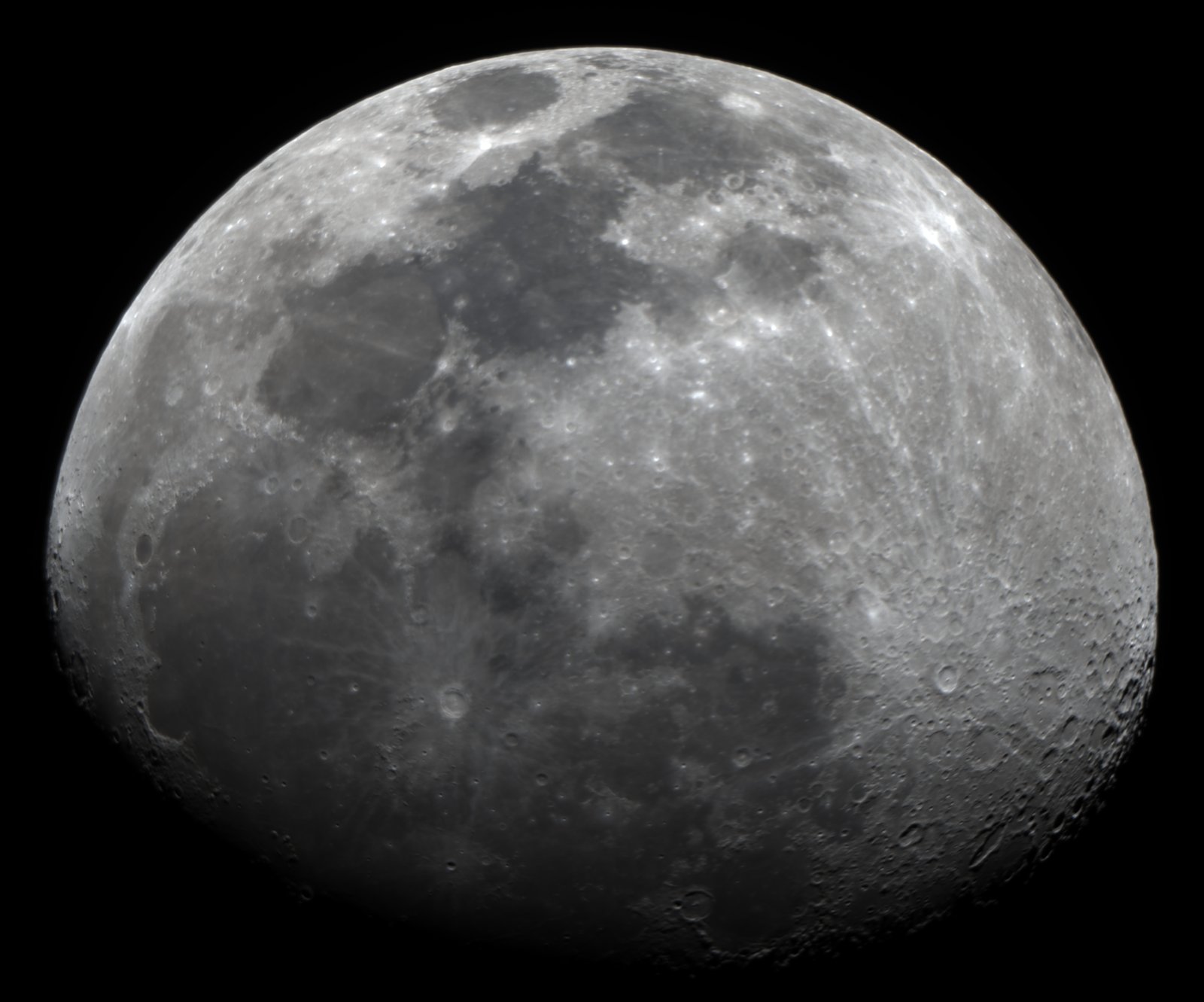
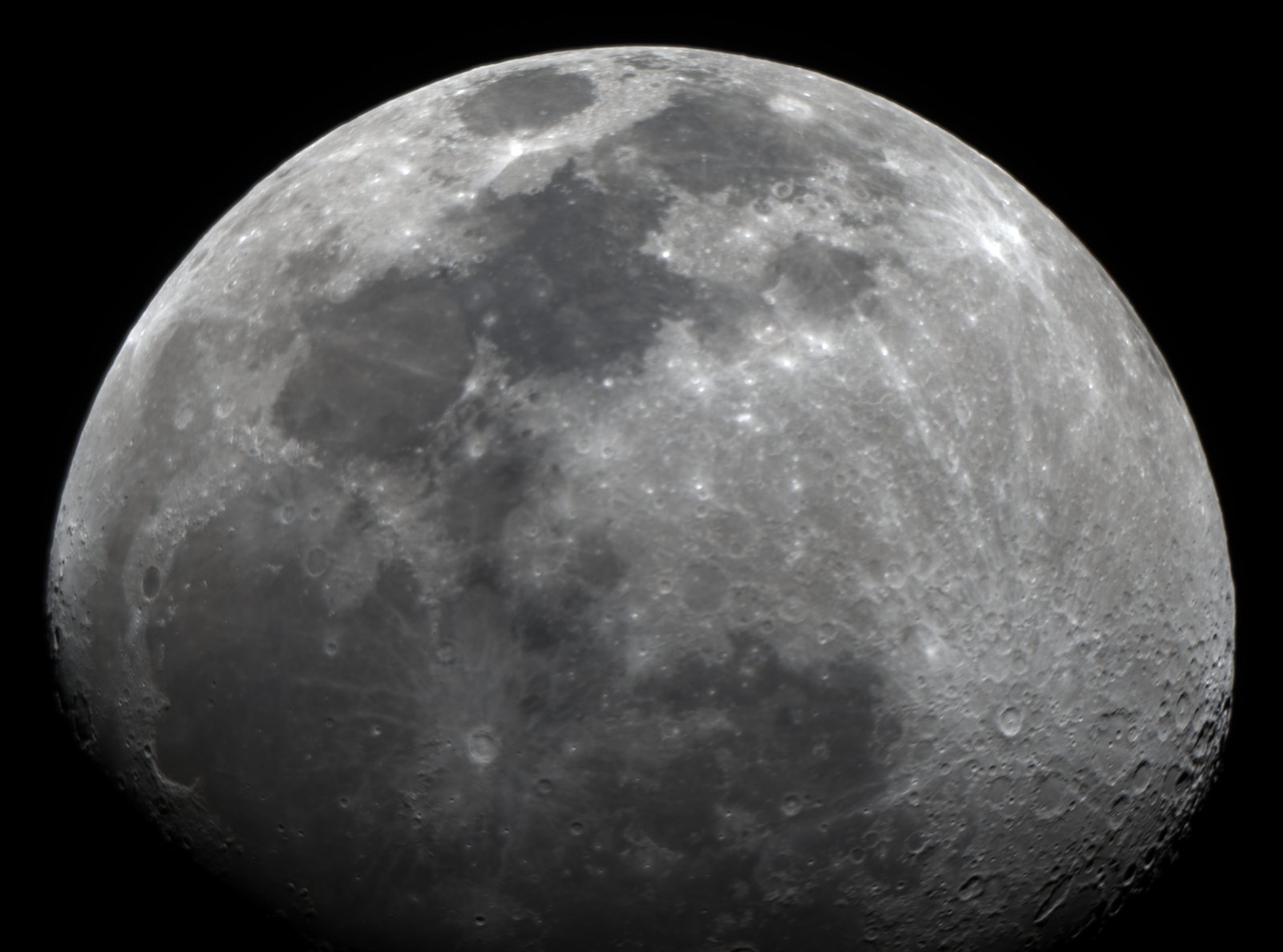
Sunlight falls from the upper right, so the eastern half of the Moon (top and right in these pictures) is in full sun, and the terminator — the line between lunar day and night — runs along the lower left. That is where the relief stands out best: crater walls cast long shadows near Copernicus, the edge of Mare Imbrium and the crater Plato. Further into the sunlit side, shadows disappear and brightness takes over: the young ray craters Tycho, Copernicus, Stevinus and Furnerius throw bright streaks of ejecta across the surface.
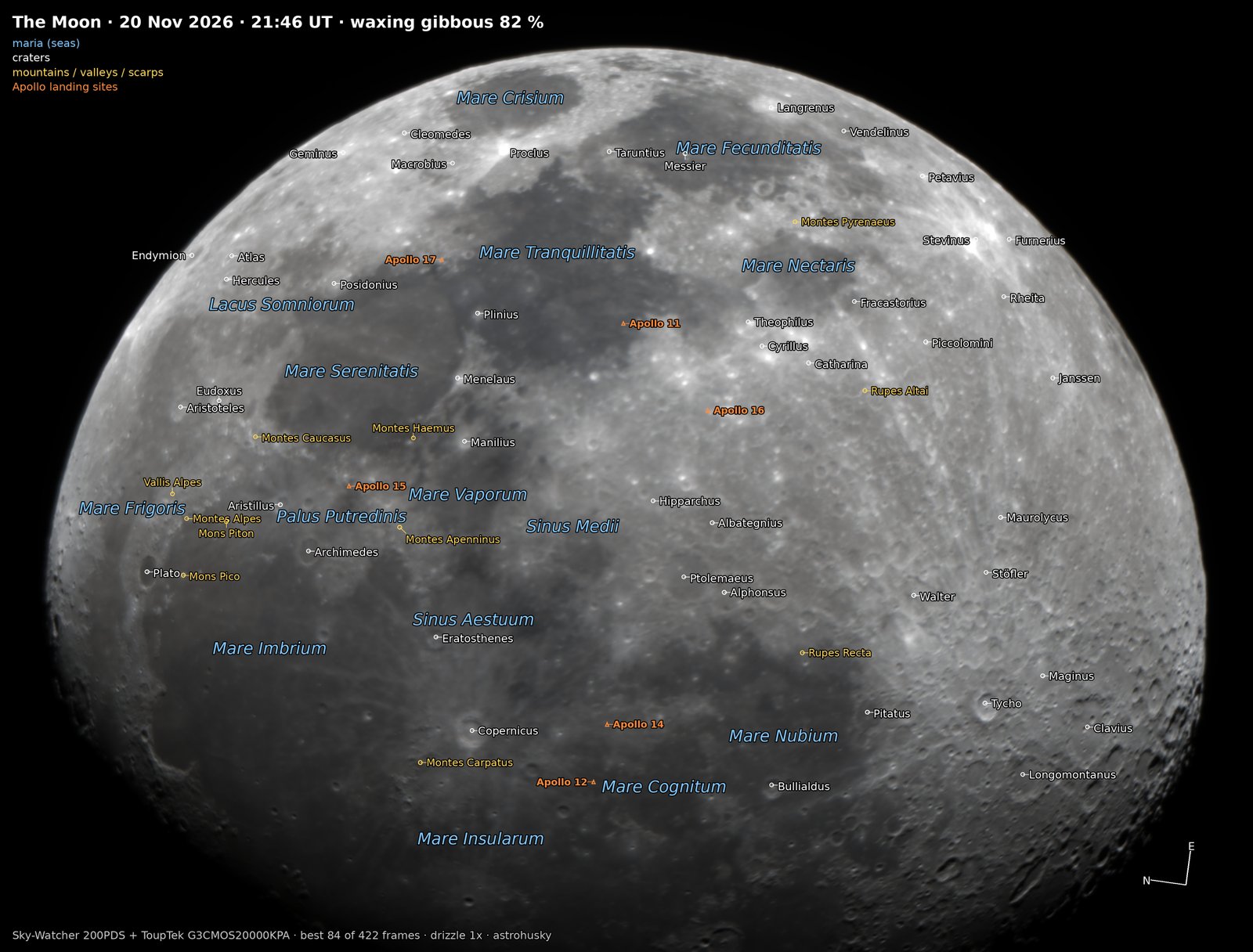
The dark plains are the maria, ancient basins flooded with basalt lava more than three billion years ago. You can follow them from Mare Crisium near the top, through Tranquillitatis and Serenitatis, down to Mare Imbrium and Oceanus Procellarum at the terminator. The labelled version shows the names, and also where six Apollo crews landed.
The Moon in colour
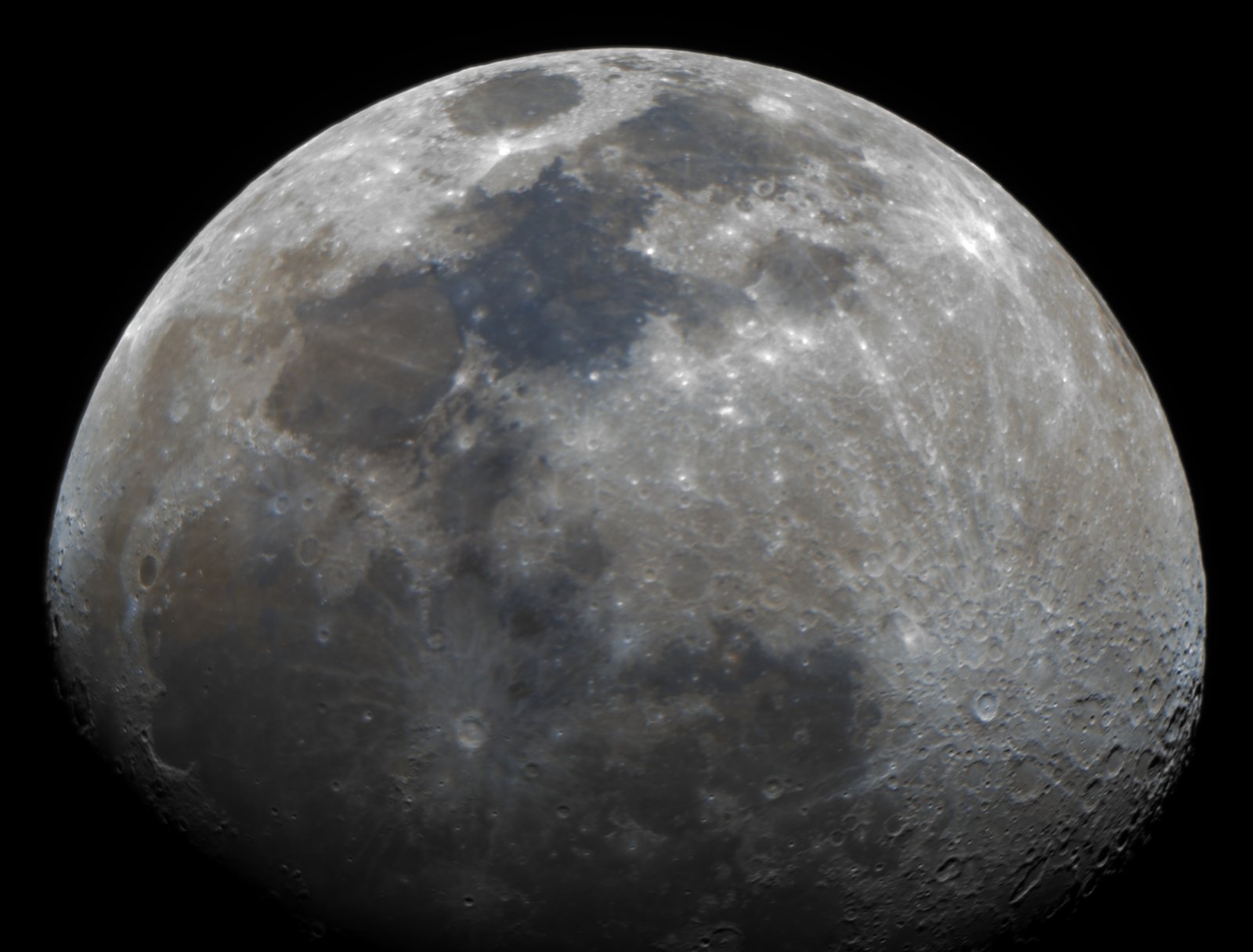
The Moon looks grey, but it isn’t quite. Lava plains rich in titanium are slightly bluer, and iron-rich soils are slightly redder or browner. My colour camera records these tiny differences, and boosting the saturation about five times makes them visible: the blue of Mare Tranquillitatis and the orange-brown of Mare Serenitatis next to it are real differences in what the ground is made of.
How it was made: lucky imaging
Through a telescope at high magnification, the air above us makes the Moon shimmer like the bottom of a swimming pool. A single long photo would smear that shimmer into a blur. So instead I recorded video: hundreds or thousands of frames with exposures of only 1.4–4.3 milliseconds, short enough to freeze the turbulence.
- Score every frame for sharpness and keep only the best — the “lucky” moments when the air was steady.
- Align them in small tiles, not just as a whole, so the local wobbles of the seeing are undone.
- Stack the kept frames to wipe out the noise, using drizzle straight from the raw colour-sensor pixels.
- Sharpen fine, medium and coarse detail separately, then colour-balance on the lunar surface.
I recorded four videos that evening. The 22:47 one gave the sharpest result. The two below come from the 22:54 and 23:13 videos and look almost the same; they show how steady the seeing stayed over that half hour.
Gear
- Telescope: Sky-Watcher Explorer 200PDS Newtonian, 1000 mm at f/5, prime focus (no Barlow, no coma corrector)
- Mount: Sky-Watcher EQ5 Pro SynScan GoTo
- Camera: ToupTek 183CA (G3CMOS20000KPA, Sony IMX183 colour), full 5440 × 3648 frame, no filter
- Capture: FireCapture 2.7, 8-bit raw SER video at about 5 frames per second
- Exposure: 1.4–4.3 ms per frame, gain 462–591
- Image scale: about 0.5″ per pixel — the Moon (31.9′ across that night) is about 3,860 pixels wide
All five pictures are also in my Moon gallery. The Moon will be full on 24 November — bright, but flat, with almost no shadows. The days around first and last quarter are the best time to catch the terminator again. Clear skies!
// comments
Comments are moderated; first time may take a moment to appear.