// 12 July 2026
The Crescent Nebula, Together — HOO from Hydrogen and Oxygen (NGC 6888)
Two filters, several short summer nights, about six hours of narrowband — combined into one bicolour image of the Crescent’s blown-off shell.
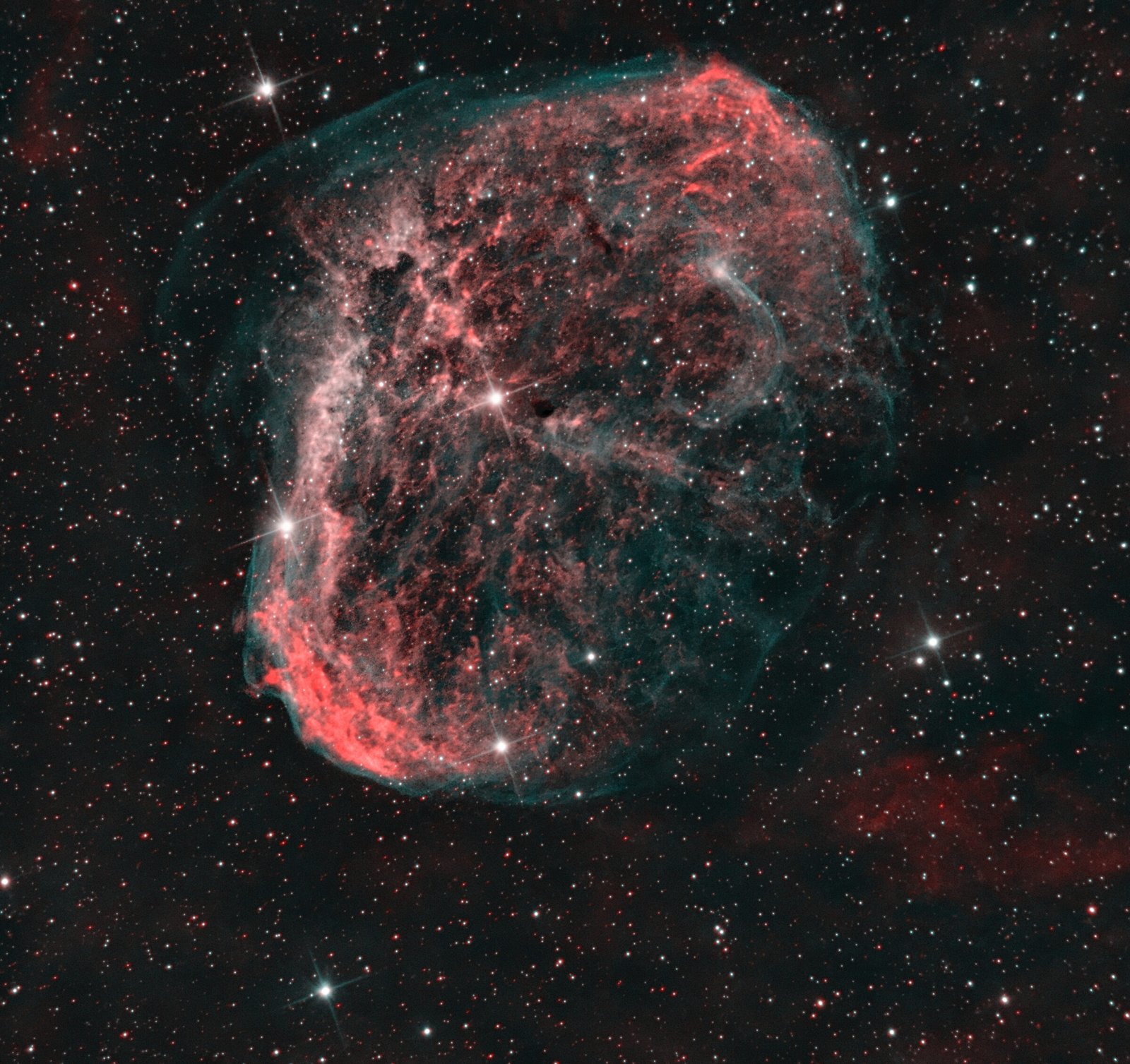
This project was always aimed at one image. Night 1 was oxygen — the faint bubble that surrounds NGC 6888. The nights after were hydrogen — the bright, crumpled shell that gives the Crescent its name. On their own each is a grey frame. The reason you shoot both is this: bring them together in the HOO palette and the object finally looks like the thing it is — a dying star’s outer layers, lit from inside. Here is where it ended up.
What went into it
Same rig throughout: the Sky-Watcher 200PDS Newtonian, the ToupTek ATR533M mono camera at −10 °C and gain 100, guided off the 90 mm scope. I shot far more subframes than made the final cut, then culled hard on star shape and background — twilight, a meridian flip and the odd cloud all cost frames. What survived and stacked:
- Hydrogen-alpha: 48 × 300 s — 3 h 58 m
- Oxygen-III: 41 × 180 s — 2 h 03 m
- ~6 hours total, mono, calibrated and integrated per filter
Neither channel is enormous on its own. Narrowband is forgiving that way — a narrow filter cuts a thin slot around the nebula’s own light and lets the bright, never-quite-dark high-latitude summer sky fall away, so even two or three hours pulls real structure out of the background.
One honest caveat. At this latitude in July the sky never actually reaches astronomical darkness — it only dips into deep twilight for a couple of hours before dawn. That permanently bright sky hit the hydrogen hardest: the Hα subs came out weak and noisy, and even after stacking and heavy cleanup the hydrogen is the limiting channel here — thinner and grainier than I’d like. It’s the main reason this reads as a “good for the conditions” image rather than a clean one, and it’s the first thing I’d re-shoot once the autumn nights turn properly dark.
From a single frame to the final
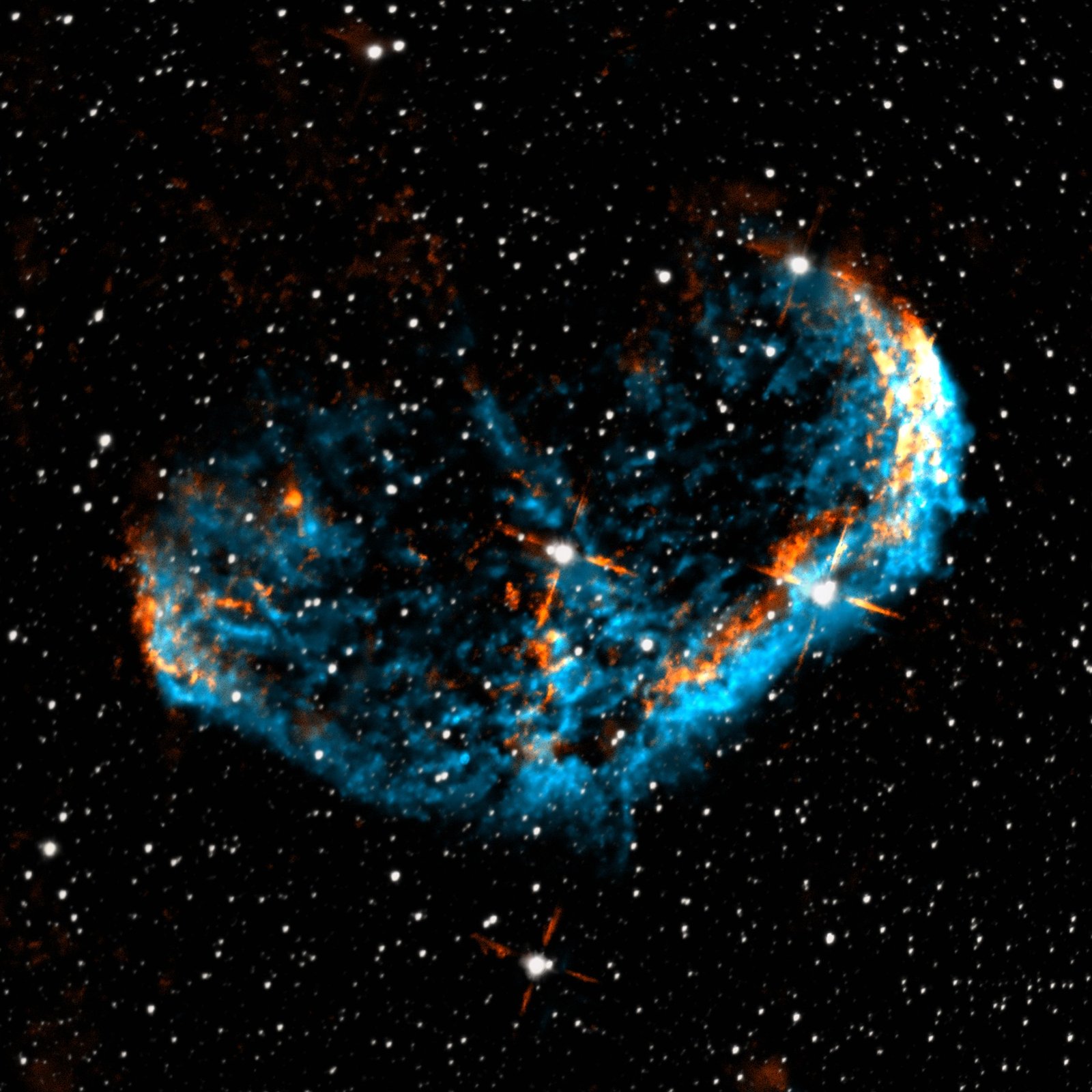
The clearest way to see what stacking and processing actually buy you is to line up the stages — one raw sub per filter, then the stacked-and-starless nebula, then the finished image.
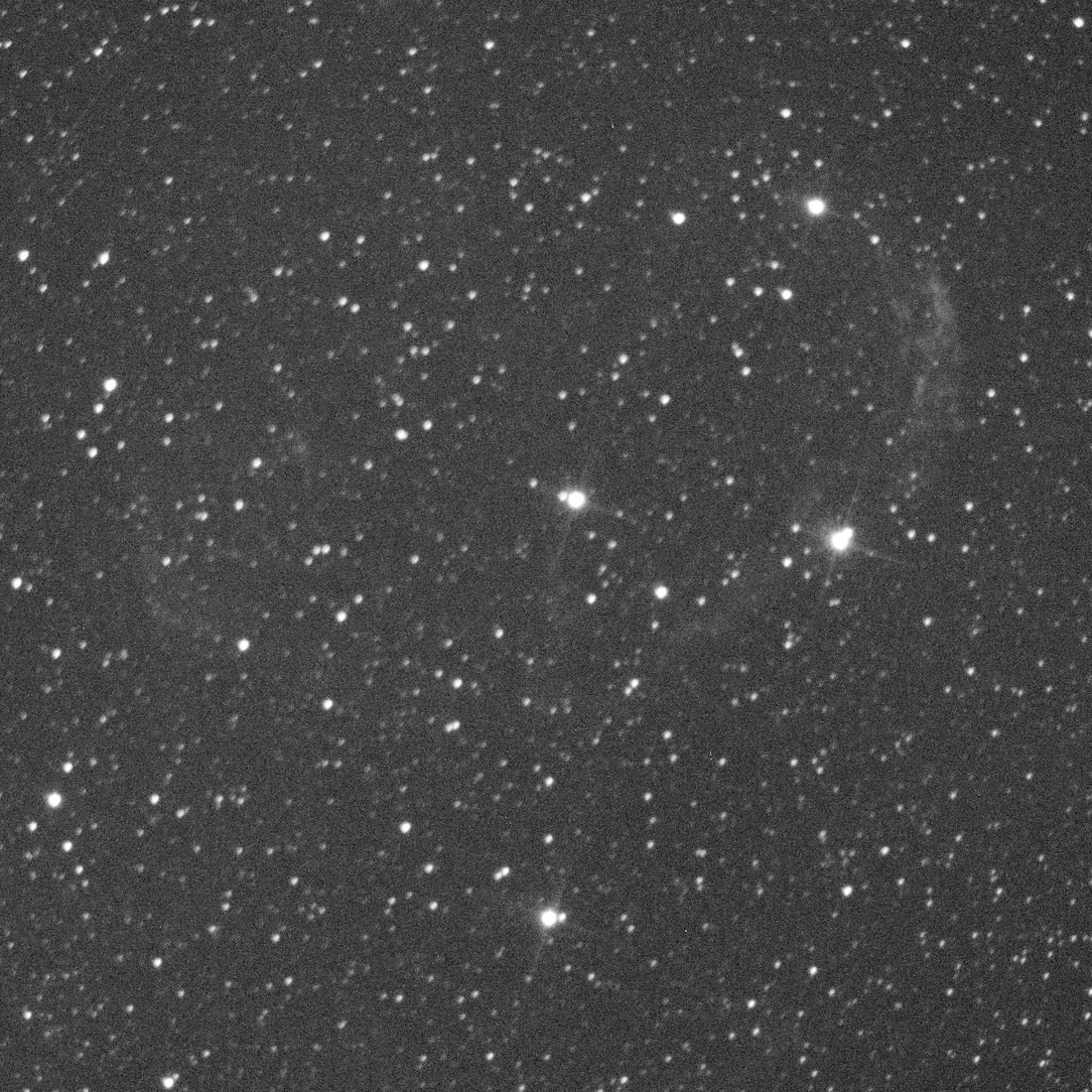
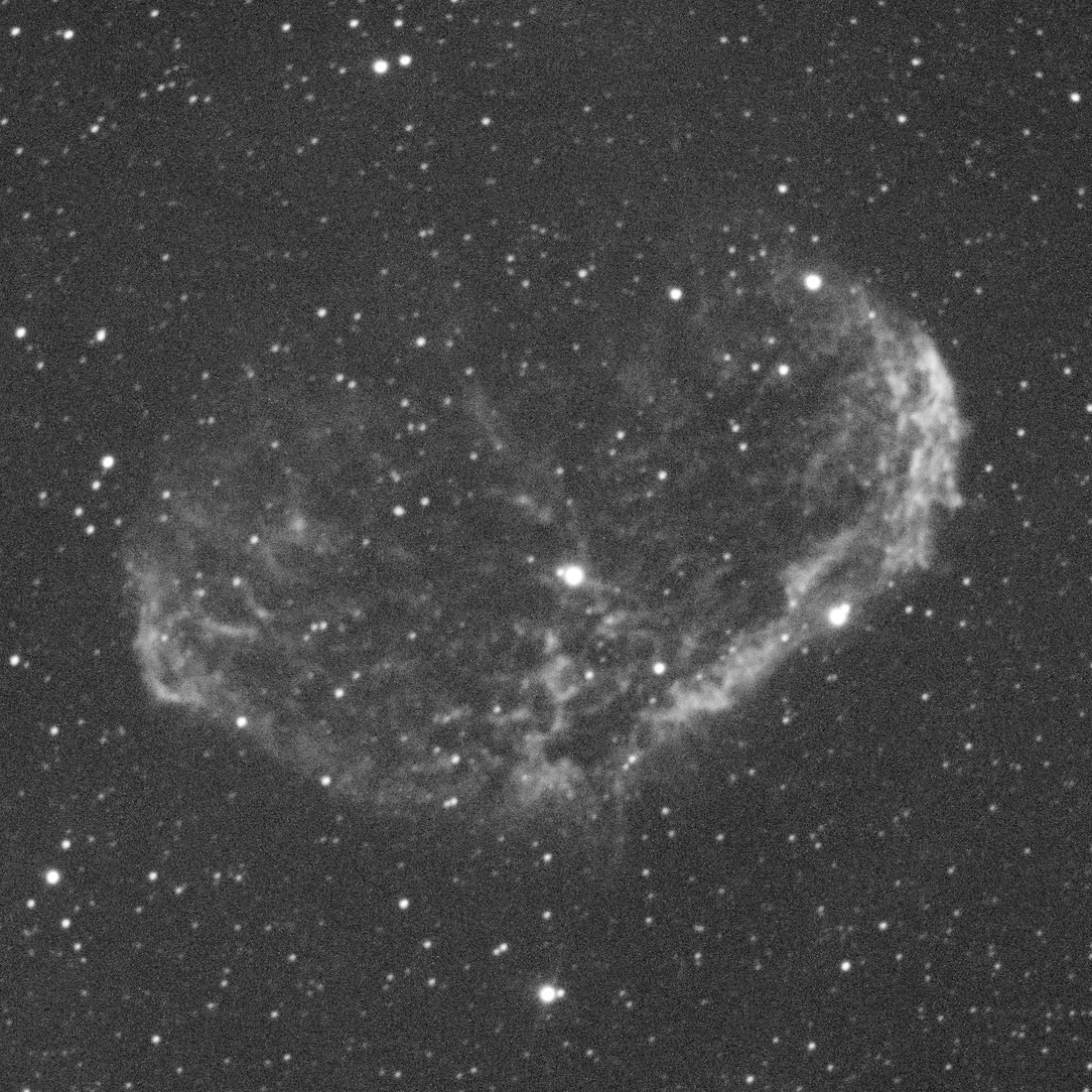
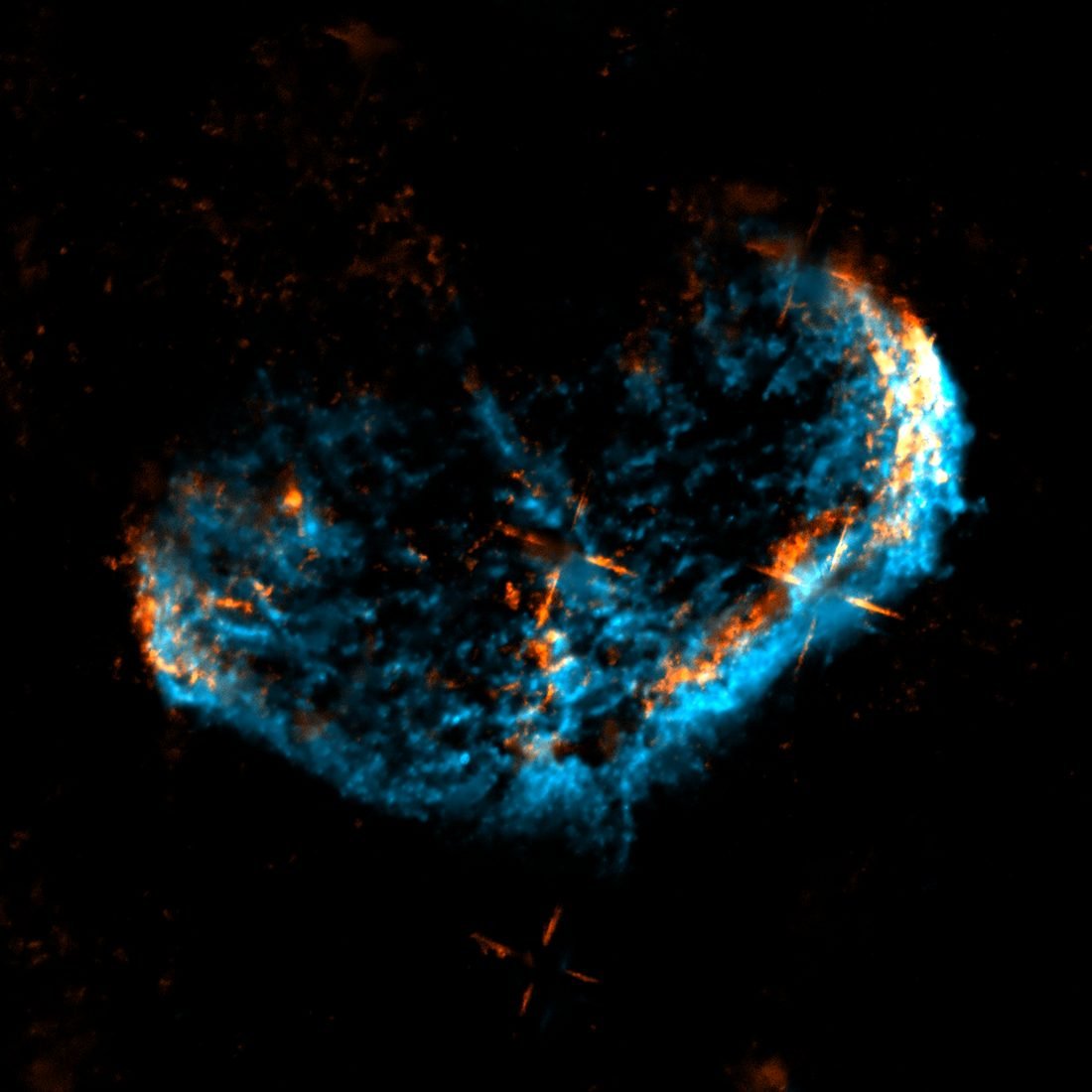
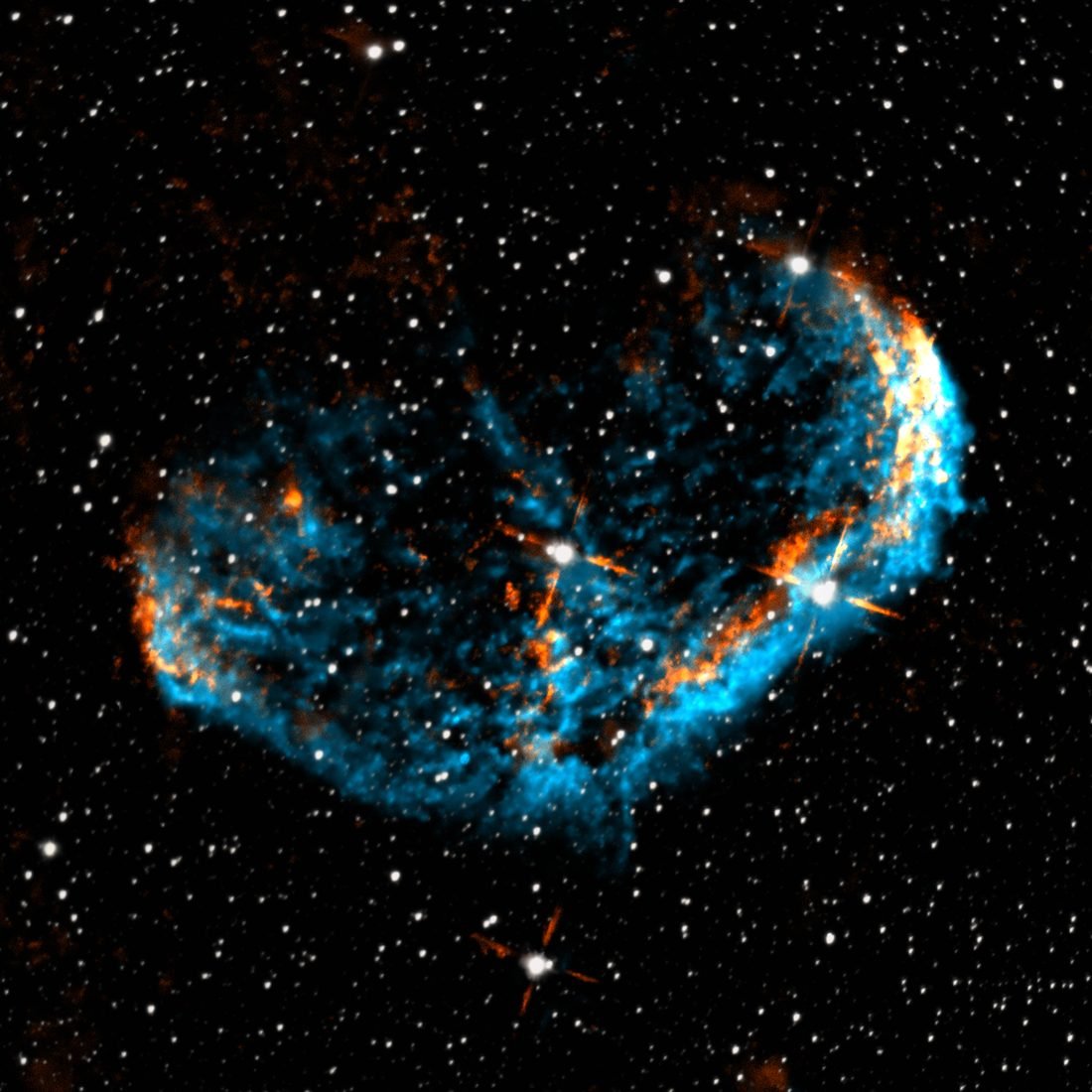
Going from one frame to fifty is what turns that grey, grainy shell into something you can actually stretch and colour — every doubling of frames roughly halves the noise.
Turning two grey stacks into one picture
Hydrogen drives the red channel, oxygen the green and blue. Where the two overlap you get the hot pale edges; where only oxygen glows you get the teal interior; the pure hydrogen filaments stay red. The step that matters most — and is easiest to get wrong — is levelling the two: oxygen data often carries a higher background than hydrogen, and if you don’t match them the whole frame drifts teal and the red shell disappears. The nebula was denoised and sharpened per channel, the stars separated out and reduced, then added back as small, neutral points.
What the image shows
The bright western rim is where hydrogen and oxygen pile up together, the densest part of the expanding shell. The teal fills the cavity the star has blown clear, threaded through with fine red hydrogen filaments — and the whole thing sits in one of the richest star fields in the sky, deep in Cygnus. It isn’t observatory-grade — there’s noise in the faint oxygen, and I’d happily put more hydrogen on it — but it’s an honest six hours from a small backyard Newtonian in a season that’s supposed to be too bright to image at all, and it’s the picture the whole two-filter plan was for.
Update — October 2026: a fresh HOO
I re-shot the Crescent in autumn 2026 on the ToupTek StellaVita, with the Sky-Watcher 200PDS and a cooled ATR533M mono camera — two nights of Hα and OIII, about 3.3 hours total, from Mecklenburg-Vorpommern. Here is the new HOO version:
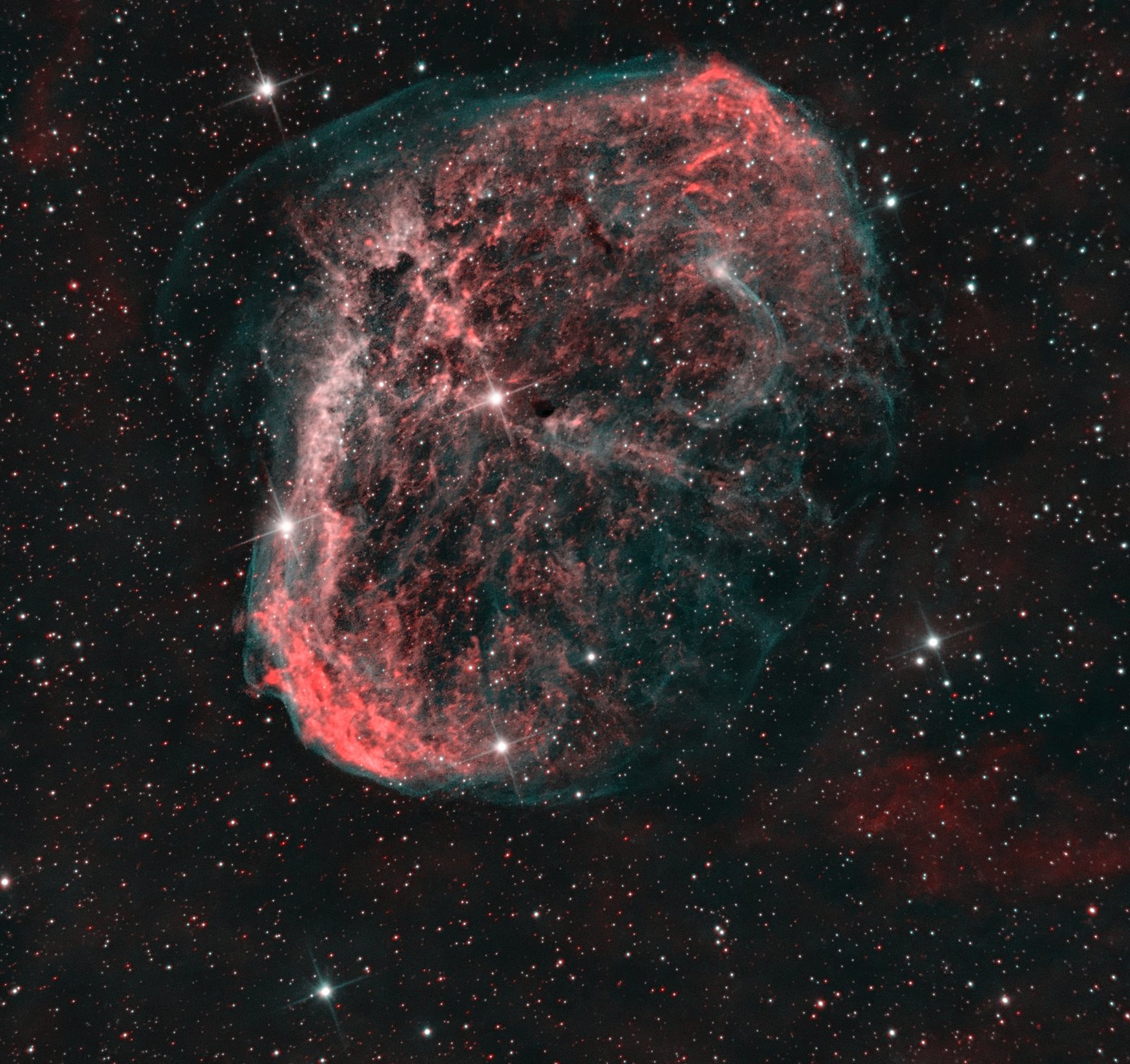
The full set is on the NGC 6888 gallery page.
// comments
Comments are moderated; first time may take a moment to appear.